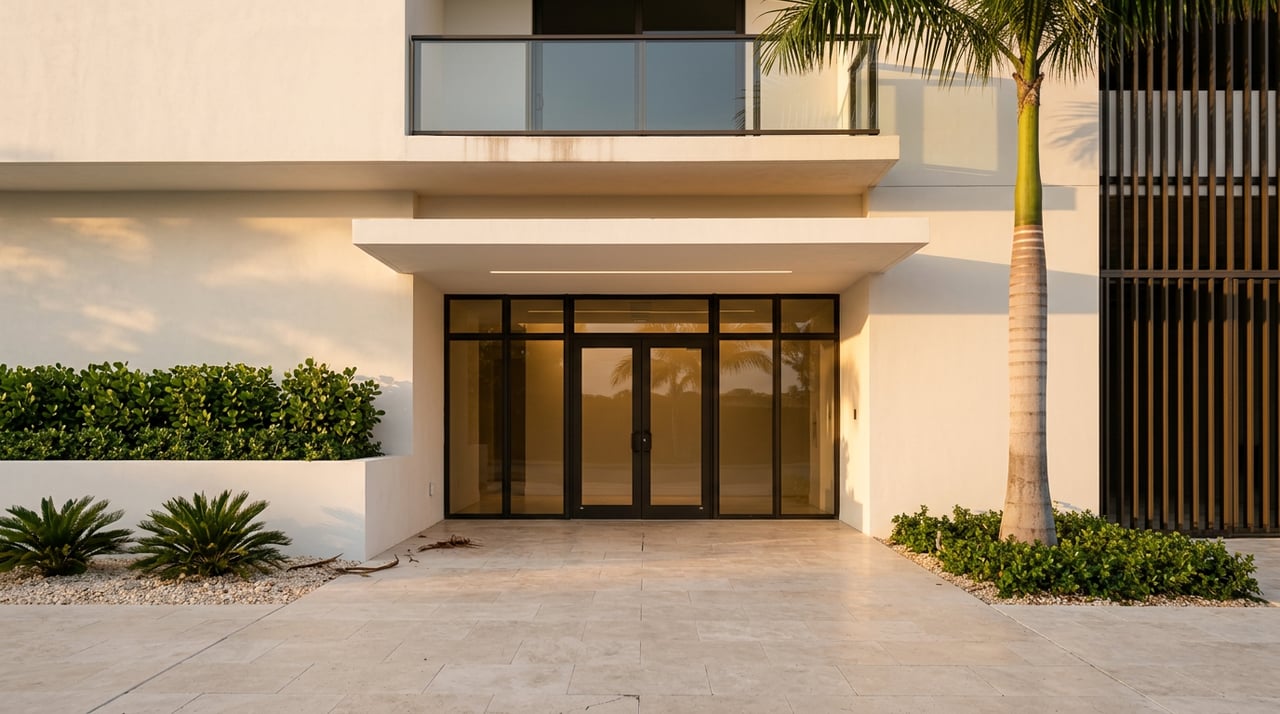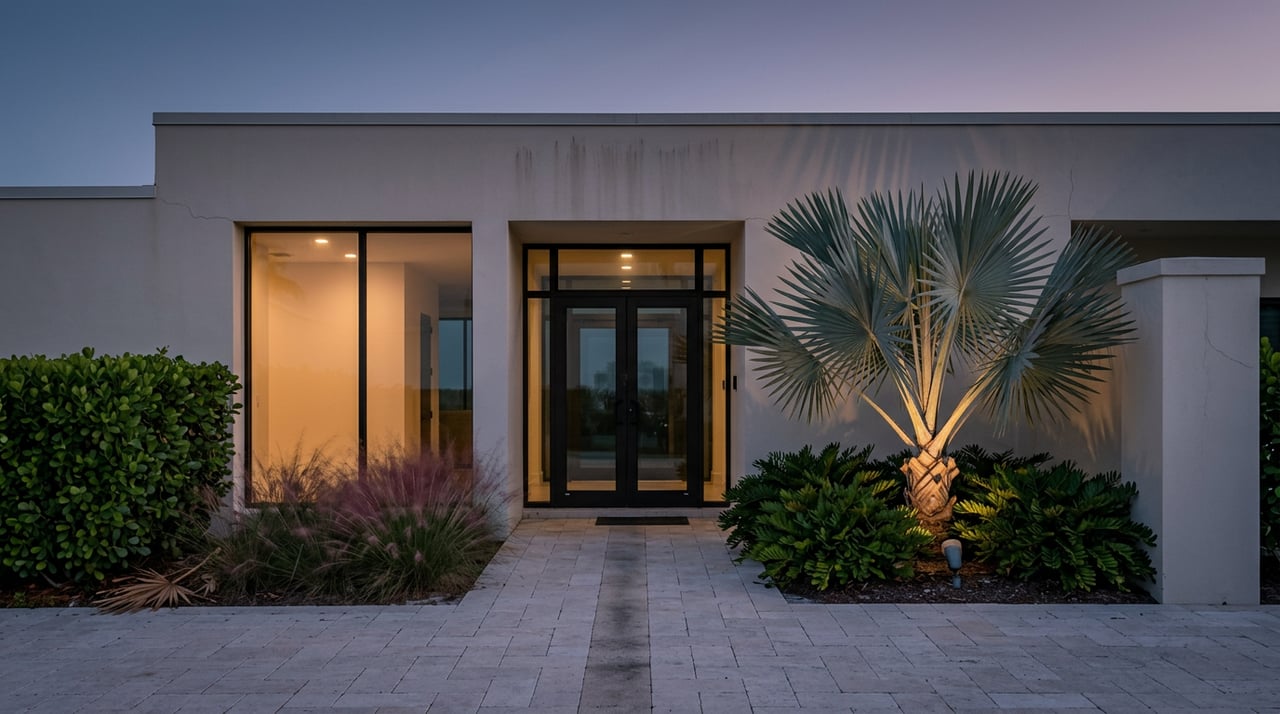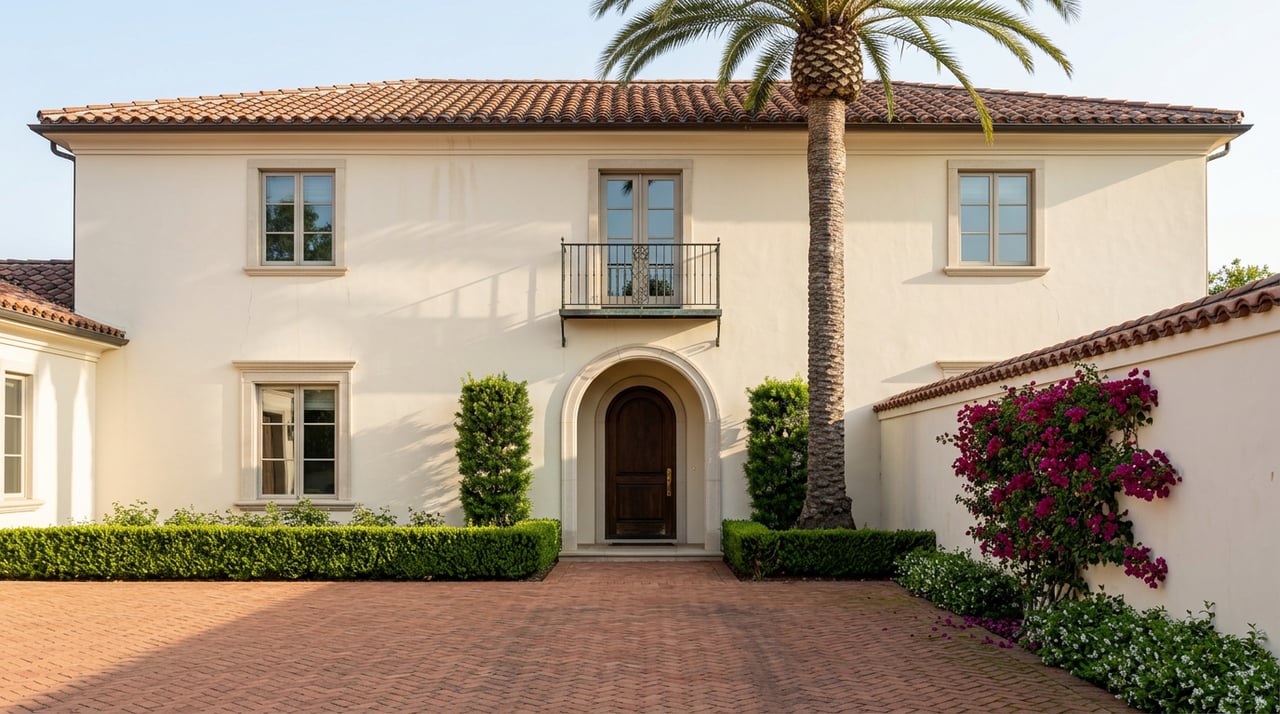
A buyer closes on a Palm Beach estate in January, envisioning a finished kitchen and a new pool house by the following season. They hire a well-regarded architect, sketch out a scope that would take most Florida municipalities six weeks to approve, and submit it to the Town. Eighteen months later, construction has not started. The general contractor has done nothing wrong. The holdup is a five-member volunteer board that meets once a month and answers to no one but the Town Council.
That board is the Architectural Commission, known on the island as ARCOM, and it is the single most consequential variable in how long a Palm Beach renovation actually takes. Buyers who understand this before they write an offer price their timeline correctly. Buyers who don't discover it the way most people discover code enforcement: too late to do anything but wait.
The Number Nobody Puts in the Listing
At any given moment, roughly 80 significant single-family projects are working their way through permitting on the island of Palm Beach. Fewer than half will deliver on the timeline the owner originally set. The reason is almost never the framing crew or the supply chain. It is ARCOM, and more specifically, an owner's misunderstanding of what the commission actually evaluates.
This matters because the appreciation numbers a buyer arrives with tell only half the story. Palm Beach Island has posted 118.2 percent appreciation over the past five years, with average home values now near $9.8 million and a mid-2025 median single-family sale price close to $12.9 million. Nearly seventy percent of single-family closings in the first half of 2025 cleared $10 million. Those figures describe what the island's real estate has been worth. They say nothing about how long it takes to turn an estate you bought into the one you actually want to live in.
That gap became a lot more visible after the pandemic buying wave hit the island. As Premier Estate Properties broker Jim McCann put it, describing the shift in demand, "We had what I thought was a healthy market, and then COVID hit, and everything went ballistic." New owners with new money wanted to maximize their property immediately, whether that meant a full teardown or a simple pergola. ARCOM's docket got longer. The review pace did not speed up to match it.
Three Review Bodies, Not One
Palm Beach Island is not a single regulatory environment. Depending on where a parcel sits, a project can answer to as many as three separate bodies, each with its own scope and its own added weeks.
| Review body | What it covers | Typical timeline impact |
|---|---|---|
| Architectural Commission (ARCOM) | Exterior design, massing, materials, and landscaping for any property visible from a public right-of-way | Adds roughly 6 to 12 weeks on top of standard permit review |
| Landmarks Preservation Commission (LPC) | Landmarked properties and historic districts, under Chapter 54 of the Town Code | Full commission review can add months, especially with remands |
| Coastal Construction Control Line (CCCL) | Oceanfront parcels, administered under Florida state law | Runs in series with ARCOM rather than parallel, adding another 3 to 5 months |
A standard permit review for a new single-family home on the island runs 12 to 20 weeks on its own. Layer in ARCOM, and a clean custom residence typically needs four to six months from complete design documents to an issued permit, followed by 16 to 22 months of construction. Add an oceanfront lot with CCCL requirements running in sequence rather than alongside ARCOM, and the pre-construction phase alone can stretch past a year.
Why the Delay Is Rarely the Contractor's Fault
ARCOM meets monthly. Architects present in person, typically with the owner and general contractor in the room. The commission's remit is narrow but decisive: scale, proportion, exterior materials, and compatibility with the surrounding streetscape. Projects that arrive underprepared get remanded, and each remand costs the owner another four to six week cycle before the next hearing slot opens.
The projects that clear on the first or second try almost always went through a pre-application staff meeting first, a working session where Town staff flag likely objections before they become a formal vote. Owners who skip that step and go straight to a hearing are the ones who end up telling friends that ARCOM took two years. Recent agendas show the range of what actually comes before the commission in a single cycle, from a combined renovation and addition at 150 Dunbar Road and 151 Atlantic Avenue to a new two-story residence proposed for 142 Casa Bendita to storefront signage changes at 259 Worth Avenue that would be a permit-desk decision in almost any other Florida municipality.
The Historic District Adds Its Own Tax
If a parcel sits inside one of the island's historic districts, which cover much of Midtown, the Sea Street area, and the El Brillo corridor in the South End, with additional overlay pockets in the North End, the project answers to the Landmarks Preservation Commission and the standards codified in Chapter 54 of the Town Code, not just ARCOM. More than 328 landmarked properties, sites, and vistas are currently protected under that ordinance, and the LPC meets monthly to review changes to them.
Historic renovations typically run 15 to 30 percent higher in cost than comparable non-historic work, with two to six month timeline extensions common. The rules go deeper than most buyers expect. Replacing a historically significant slate or clay tile roof with asphalt shingles requires full commission review and is routinely denied on contributing structures, while in-kind replacement using matching materials can qualify for a faster administrative track. Demolition of a contributing structure built before 1965 inside the overlay is not routine, and denial is common. Additions to a historically significant structure must be subordinate in scale, meaning an owner cannot simply match the original design if the original itself is what's being protected.
A Recent Example That Made the Rules Impossible to Ignore
Developer Todd Michael Glaser, known in Miami Beach for high-end projects including a stint flipping Al Capone's former house, relocated to Palm Beach in recent years and became one of the island's more visible test cases for how ARCOM handles ambition. He paid $85 million for Tarpon Island and $18.5 million for the estate on El Brillo Way once owned by Jeffrey Epstein, which he tore down with plans to replace it with what he described as a design that could one day be a landmark in its own right. He has called the ARCOM process "disheartening" even while holding prior approvals from the same board.
ARCOM's own chairman at the time, addressing criticism that the commission gets too deep into the weeds on individual projects, offered a simple defense:
"We don't need to see every little thing."
That tension, between an owner's desire to move fast on a major asset and a commission's mandate to protect a shared aesthetic, is not going away. Town attorney John "Skip" Randolph has described the general sentiment inside Town Hall as positive, noting that people feel the commission is "doing a good job on behalf of the town." Whether a given owner agrees usually depends on how many remand cycles they've been through.
Pricing the Delay Into the Offer, Not Discovering It After Closing
The island's luxury market has not slowed down while all of this plays out. In the week of August 10 through 16, 2026, buyers signed 13 contracts across Palm Beach County at an average asking price near $7.7 million, or roughly $1,731 per square foot, according to Douglas Elliman's weekly Eklund-Gomes report. The week before that, a Palm Beach estate asking $76 million led 16 signed contracts totaling more than $245 million. Capital keeps arriving. What separates a smooth renovation from a two-year headache is not the size of the check but whether the buyer modeled the review timeline honestly before they wrote the offer.
For anyone weighing a purchase with renovation plans attached, the realistic sequence looks like this:
- Pre-application and schematic design. Four to eight weeks of architectural work before anything reaches the Town's planning desk.
- Staff preview meeting. An informal working session with ARCOM staff that surfaces likely objections early, which is how experienced architects avoid losing the first hearing.
- First formal ARCOM hearing. The commission votes on preliminary approval or sends the project back for revisions, each remand adding four to six weeks.
- Final architectural approval. Detailed elevations, material samples, and window specifications go before the commission a second or third time.
- Permit submission and review. A base 12 to 20 week process through the Town's Building Division, running longer if the parcel triggers CCCL review.
- Construction. Typically 16 to 22 months for a 6,000 to 10,000 square foot custom residence, assuming no major change orders.
Closing before ARCOM approval is common, and most buyers do it. The tradeoff is that carrying costs during design and review become the buyer's responsibility from the day they close, not the day they get a permit in hand.
Frequently Asked Questions
Can I close on a Palm Beach estate before ARCOM approves my renovation plans? Yes, and it's the norm rather than the exception. The tradeoff is that the review clock starts at closing, and any carrying costs during design and hearings are the buyer's to absorb rather than something negotiated into the purchase price.
Does buying off-market make the renovation process any faster? The regulatory overlay is identical whether a property sells on-market or off. What off-market access can offer is time, specifically the chance to start a pre-application dialogue with the Town before the parcel is even under contract.
How do I know if my property is inside a historic district before I make an offer? Ask directly whether the parcel sits within the Midtown, Sea Street, or El Brillo corridor boundaries, or within one of the North End overlay pockets, since these trigger Landmarks Preservation Commission review under Chapter 54 in addition to standard ARCOM review. The Town's Planning, Zoning and Development Review office maintains current district maps and can confirm a parcel's status before you write an offer.
If you're evaluating a Palm Beach estate with renovation in mind, the purchase price is only one half of the math. The other half is how realistically you've modeled the months between closing and the first shovel in the ground. The South Ocean Group works these numbers with clients before an offer goes in, not after. Browse homes currently available on the island, or reach out for a free home value consultation if you're weighing whether now is the right time to sell before someone else takes on the renovation timeline instead.